

What Is Natural Chamois Leather and Why Is It So Absorbent?
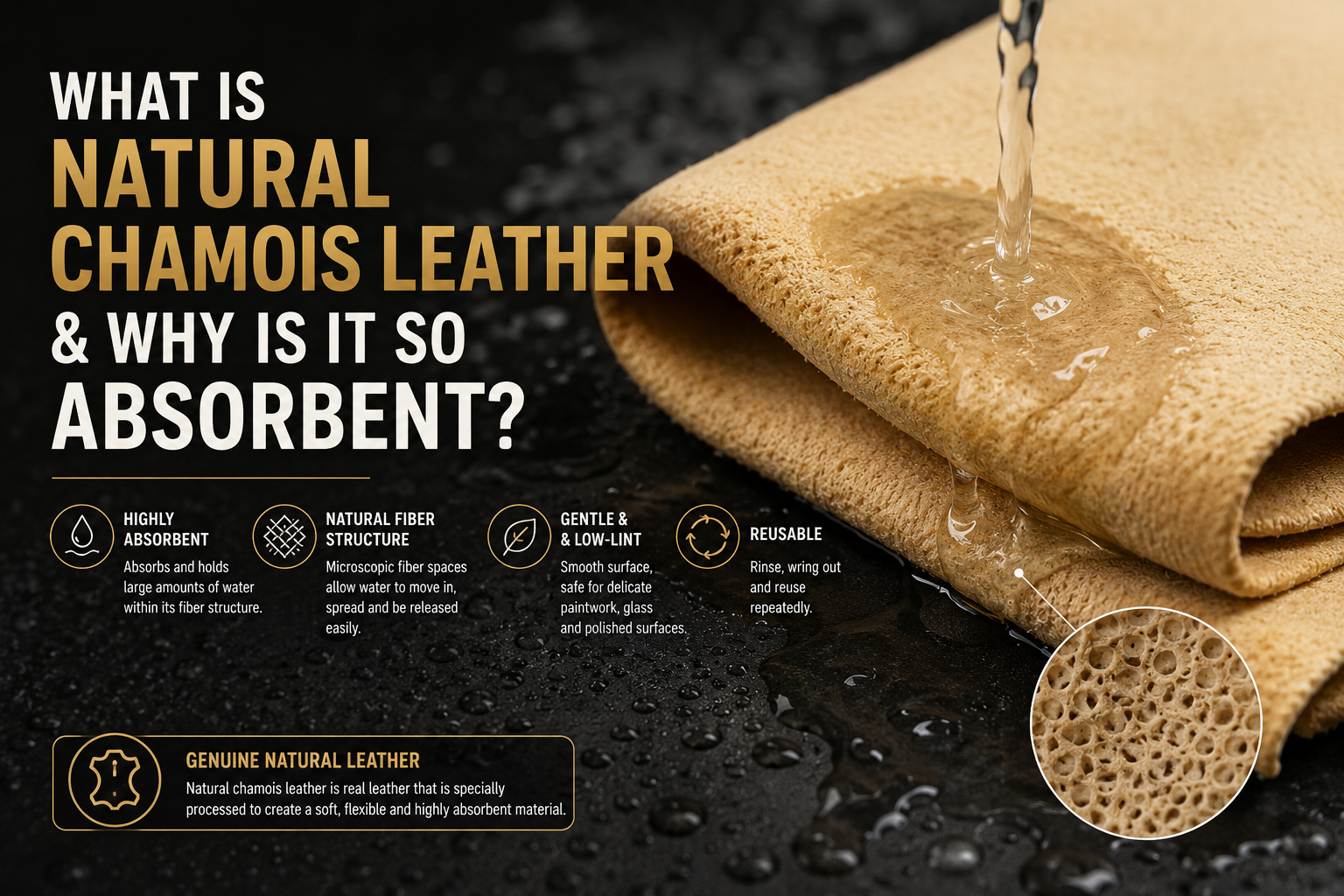
Natural chamois leather is a soft, highly absorbent leather traditionally used for drying, cleaning and polishing smooth surfaces. Its unique fibre structure allows it to absorb and release significant amounts of water while remaining flexible, low-lint and gentle on delicate surfaces such as automotive paintwork and glass. Compared with microfiber cloths, natural chamois leather provides a different drying experience due to its natural structure and high absorbency.
What Is Natural Chamois Leather?
Natural chamois leather is a specially processed natural leather designed to create a soft, porous and highly absorbent material. Unlike ordinary finished leather, it is processed to retain a flexible structure that can absorb water throughout the material rather than simply holding moisture on the surface.
What Is Chamois Leather Made From?
Natural chamois leather is made from genuine animal hide that is specially processed to create a soft, highly absorbent and flexible cleaning material. Unlike synthetic chamois cloths, genuine chamois leather has a natural fibre structure that allows it to absorb and hold large amounts of water while remaining gentle on delicate surfaces.
Its combination of softness, absorbency and low-lint performance makes natural chamois particularly suitable for drying, polishing and finishing applications where a smooth, streak-free result is important.
Why Is Natural Chamois Leather So Absorbent?
Natural chamois leather is highly absorbent because its internal fibre structure contains countless microscopic spaces that can take up and hold water. Unlike a smooth coated surface, the leather allows moisture to move into the material, where it is distributed through the fibre network.
This structure also allows the leather to release absorbed water when it is wrung out. As a result, the same piece can be used repeatedly during drying without needing to be replaced after each section of the vehicle.
What Is Chamois Used For?
Chamois leather is widely used for drying cars, cleaning glass and mirrors, polishing chrome and stainless steel, and caring for smooth household surfaces. Its soft surface helps remove water without leaving excessive lint, making it useful for both automotive and household care.
When properly rinsed, wrung out and maintained, genuine natural chamois leather can be reused many times, making it a practical alternative to disposable drying and polishing materials.
How Does Natural Chamois Leather Compare with Synthetic Drying Materials?
Synthetic drying materials such as microfiber can also offer high absorbency, but their performance depends on fibre type, weave, density and manufacturing quality. Natural chamois leather provides a smooth, low-lint surface together with strong water absorption and easy wringing, making it especially suitable for paintwork, glass and polished surfaces.
What Surfaces Can Natural Chamois Leather Be Used On?
Natural chamois leather can be used on a wide range of smooth surfaces where efficient water removal and a low-lint finish are important. Common applications include automotive paintwork, glass, mirrors, chrome, polished metal and selected household surfaces.
Automotive paintwork – for controlled drying after washing.
Glass and mirrors – for a low-lint, streak-free finish.
Chrome and polished metal – for removing residual moisture.
Marine surfaces – for drying smooth, finished areas.
Household surfaces – where gentle, absorbent wiping is required.
How to Maintain Natural Chamois Leather
Natural chamois leather should be rinsed thoroughly in clean water after use and gently wrung out without excessive twisting. Allow it to air dry naturally away from direct heat or strong sunlight. When completely dry, the leather may become firm; soaking it briefly in clean water before the next use will restore its softness and flexibility.
Strada Medium
Strada Large
Strada Square
SCOPRIRE Natural Chamois Leather Formats
SCOPRIRE offers genuine natural chamois leather in different formats for automotive and household care. For vehicle drying, the Strada collection provides multiple sizes for different surfaces and drying preferences.
Frequently Asked Questions
Is natural chamois leather made from real leather?
Yes. Genuine natural chamois leather is made from real animal hide that is specially processed to create a soft, flexible and highly absorbent material.
Why does natural chamois leather absorb so much water?
Its internal fibre structure contains many microscopic spaces that allow water to move into and spread throughout the leather instead of remaining only on the surface.
Does natural chamois leather leave lint?
Genuine natural chamois leather is naturally low-lint, which makes it suitable for drying glass, paintwork and polished surfaces.
Can natural chamois leather be reused?
Yes. It can be rinsed, wrung out and reused repeatedly. Proper cleaning and air drying help preserve its flexibility and absorbency.
Why does chamois leather become hard when dry?
This is normal. Natural chamois leather may become firm as it dries. Rinsing or soaking it in clean water before use restores softness and flexibility.
Conclusion
Natural chamois leather combines high water absorption, flexibility and a low-lint surface, which explains why it has been used for generations in automotive, marine and household care. Its natural fibre structure allows it to absorb water efficiently, release moisture when wrung out and be reused repeatedly. With proper care, genuine chamois leather remains an effective material for drying and finishing smooth surfaces.
[…] Natural chamois leather and microfiber are two of the most widely used materials for drying cars, but they perform very differently. Natural chamois leather is valued for its exceptional water absorption, smooth surface and streak-free finish, while microfiber is known for convenience and versatility. The best choice depends on the surface, drying method and the finish you want to achieve. […]
[…] Natural chamois leather is an effective tool for drying automotive paintwork, glass and other smooth surfaces when it is used correctly. The key is to prepare the leather properly, keep it clean and use gentle drying movements to remove water without leaving streaks or lint. […]