

Natural Chamois Leather vs Microfiber for Car Drying
Natural chamois leather and microfiber offer different advantages for car drying. Compare absorbency, finish, care and the best use cases for each material.
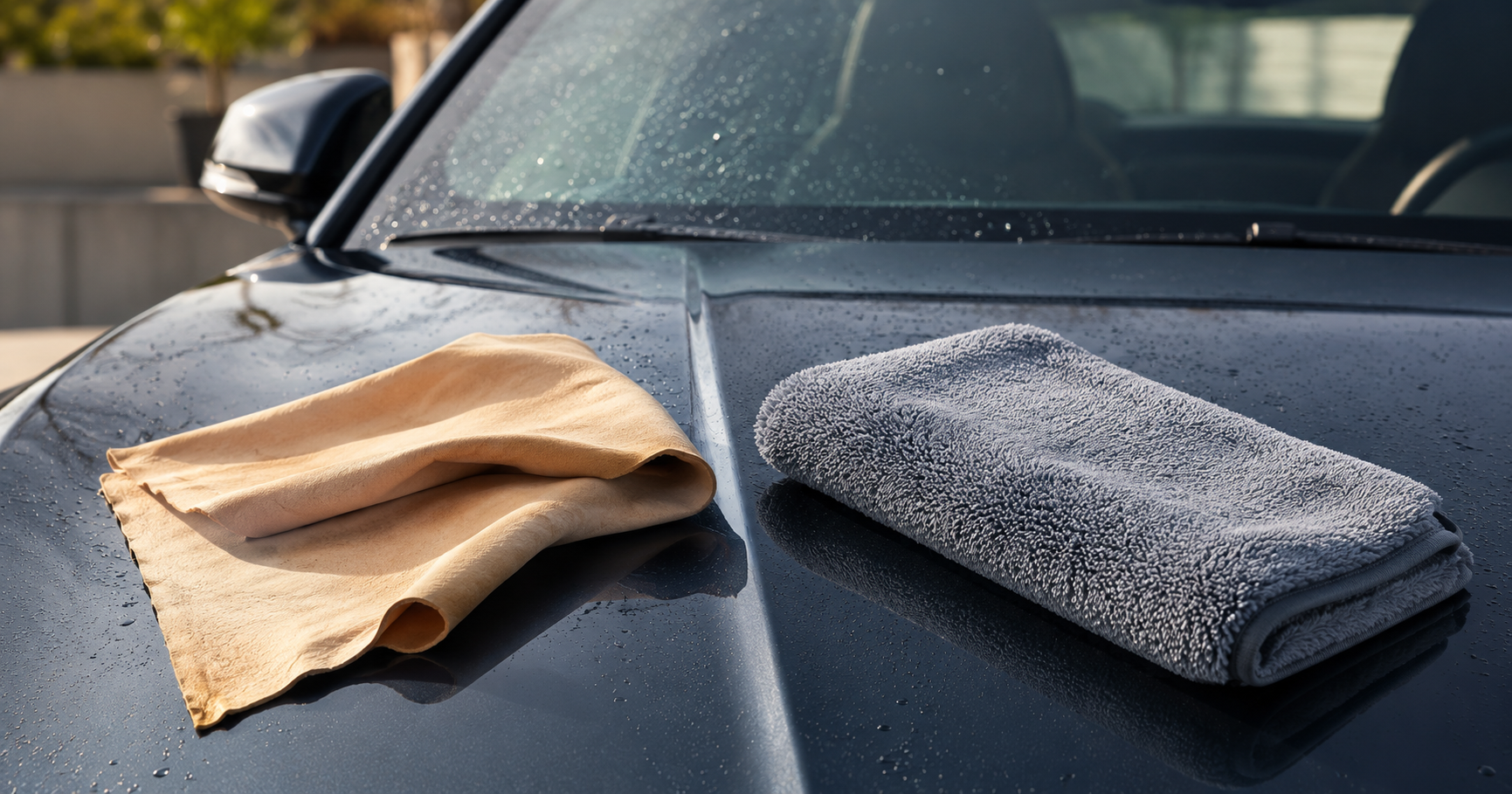
Natural chamois leather and microfiber are two of the most widely used materials for drying cars, but they perform very differently. Natural chamois leather is valued for its high water absorption, smooth surface and streak-free finish, while microfiber is known for convenience and versatility. The best choice depends on the surface, drying method and the finish you want to achieve.
Natural Chamois Leather vs Microfiber: Quick Comparison
For car drying, natural chamois leather is particularly effective when a smooth, low-lint and streak-free finish is the priority. Microfiber is a versatile synthetic alternative that is easy to wash and available in many different constructions. The better choice depends on the drying technique, surface and desired finish.
| Feature | Natural Chamois Leather | Microfiber |
|---|
| Material | Genuine natural leather | Synthetic textile fibers |
| Water absorption | High absorption and easy wringing | High absorption depending on weave and GSM |
| Surface contact | Smooth and soft | Varies by fiber and weave |
| Lint | Naturally low-lint | Depends on towel quality |
| Finish | Excellent for streak-free drying | Can provide a streak-free finish |
| Best suited for | Vehicle bodywork, glass and final drying | General drying and detailing |
| Care | Rinse, wring and air dry | Usually machine washable |
What Is Natural Chamois Leather?
Natural chamois leather is a soft, highly absorbent natural leather traditionally used for drying and finishing smooth surfaces. Its dense, flexible structure allows it to absorb water efficiently while leaving very little lint behind. When properly cleaned and maintained, it is particularly well suited to automotive paintwork, glass and polished surfaces.
Unlike synthetic drying materials, genuine chamois leather has a naturally smooth surface and can be wrung out repeatedly during use. This makes it practical for drying larger areas without constantly changing towels. For professional and enthusiast car care, the combination of absorbency, flexibility and a streak-free finish remains one of its main advantages.
What Is Microfiber?
Microfiber is a synthetic textile made from extremely fine fibers, commonly polyester and polyamide. In car care, microfiber towels are popular because they are lightweight, widely available and can be produced in different weaves, thicknesses and GSM levels for specific detailing tasks.
Its drying performance depends heavily on construction and quality. High-GSM microfiber towels can absorb large amounts of water, while lower-quality towels may leave lint, streaks or require several passes. Microfiber is also generally easy to machine wash and reuse, making it a practical option for routine detailing.
Synthetic Chamois vs Natural Leather Chamois
Synthetic chamois and natural leather chamois are different materials designed to perform similar drying tasks. Synthetic chamois is manufactured from man-made materials, while genuine natural chamois leather is produced from real animal hide that is specially processed for softness, flexibility and water absorption.
Natural leather chamois provides a smooth, low-lint surface and can be repeatedly wrung out during vehicle drying. Synthetic chamois may offer convenience and consistent manufacturing characteristics, but its feel, absorbency and surface contact can differ from genuine natural chamois leather.
Which Is Better for Drying a Car?
For drivers who prioritize a smooth, low-lint and streak-free finish, genuine natural chamois leather is an excellent choice. Microfiber is more versatile and easier to maintain, but its performance varies significantly depending on fiber quality, weave and GSM. For final drying of paintwork and glass, natural chamois leather remains particularly effective.
Car Drying Towel vs Chamois: Which Is Better?
A microfiber car drying towel and natural chamois leather can both remove water effectively, but they work differently. Microfiber towels rely on synthetic fibres, weave and GSM to absorb moisture, while genuine chamois leather uses its naturally porous structure to absorb water and provide smooth contact with the vehicle surface.
Microfiber drying towels are convenient and available in many sizes and constructions. Natural chamois leather is particularly useful when controlled drying, low lint and a smooth, streak-free finish on paintwork and glass are priorities.
Recommended SCOPRIRE Natural Chamois Leather for Car Drying
For regular vehicle drying, SCOPRIRE offers genuine natural chamois leather in different sizes to suit different surfaces and drying needs. The Strada collection is designed for automotive care, combining natural absorbency with a smooth, low-lint finish.
- Strada Medium – ideal for everyday vehicle drying and smaller surfaces.
- Strada Large – suitable for larger body panels and faster drying.
- Strada Square – practical for glass, paintwork and controlled hand drying.
Frequently Asked Questions
Is natural chamois leather safe for car paint?
Yes. When genuine natural chamois leather is clean, properly maintained and used on a thoroughly rinsed surface, its smooth structure makes it suitable for drying automotive paintwork. Any drying material should be kept free of grit and dirt to reduce the risk of surface marks.
Does natural chamois leather leave lint?
Genuine natural chamois leather is naturally low-lint, which is one reason it is widely used for drying glass, paintwork and polished surfaces.
Is microfiber more absorbent than chamois leather?
Both materials can absorb significant amounts of water. Microfiber performance depends strongly on weave, fiber quality and GSM, while natural chamois leather offers consistent absorbency and can be wrung out repeatedly during use.
Can natural chamois leather be reused?
Yes. After use, rinse it thoroughly with clean water, wring it gently and allow it to air dry away from direct heat. Proper care helps maintain softness and performance over repeated use.
Which is better for professional car detailing?
Both can be useful. Microfiber is highly versatile for many detailing tasks, while natural chamois leather is particularly effective for final drying where a smooth, low-lint and streak-free finish is desired.
Conclusion
Natural chamois leather and microfiber both have a place in modern car care, but they offer different strengths. For users seeking a smooth, low-lint and streak-free drying finish, genuine natural chamois leather remains a highly effective choice. Microfiber offers convenience and versatility, while chamois leather stands out for its natural absorbency, flexibility and controlled drying performance.
[…] low-lint and gentle on delicate surfaces such as automotive paintwork and glass. Compared with microfiber cloths, natural chamois leather provides a different drying experience due to its natural structure and […]
[…] leather to reduce the chance of streaks. For readers comparing drying materials, see our guide to microfiber cloths versus natural chamois […]