

How to Use Natural Chamois Leather for Car Drying
Learn how to use natural chamois leather correctly for car drying, glass and paintwork, including preparation, drying technique, cleaning and storage.
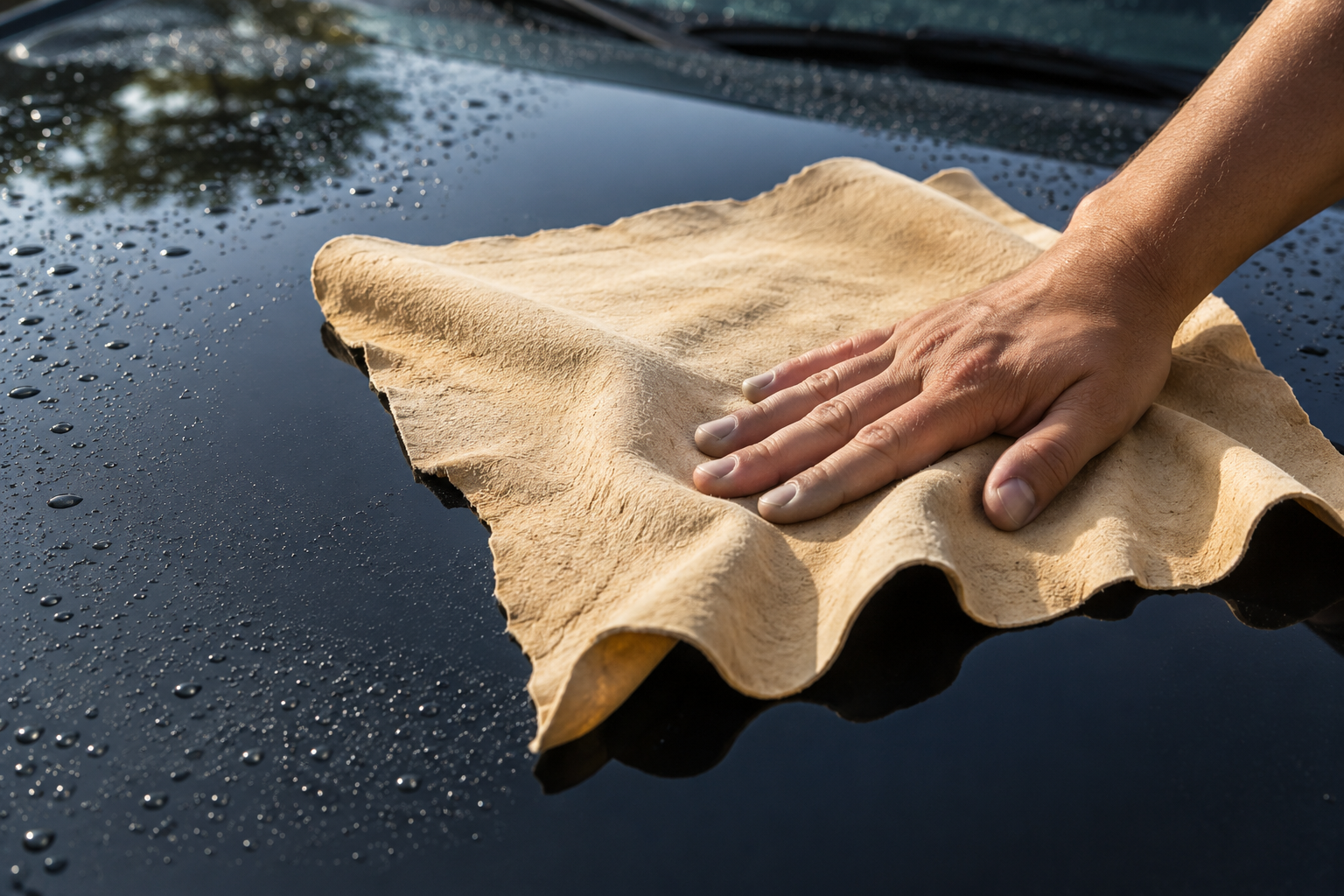
Natural chamois leather is an effective tool for drying automotive paintwork, glass and other smooth surfaces when it is used correctly. The key is to prepare the leather properly, keep it clean and use gentle drying movements to remove water without leaving streaks or lint.
How to Prepare Natural Chamois Leather Before Use
Before using natural chamois leather for the first time, rinse it thoroughly with clean water and gently wring out the excess moisture. The leather should be damp and flexible, not completely dry or dripping wet. This helps it glide smoothly across the vehicle surface and improves water absorption.
Step-by-Step: How to Dry a Car with Natural Chamois Leather
1. Rinse the Vehicle Thoroughly
Before drying, make sure the vehicle surface is completely free from loose dirt, dust and grit. Any remaining particles can increase the risk of surface marks during drying.
2. Keep the Chamois Damp
Use the natural chamois leather while it is damp and flexible. If it begins to dry during use, rinse it with clean water and wring it out gently before continuing.
3. Use Light, Controlled Movements
Lay the chamois flat against the surface and draw it gently across the paintwork. Avoid excessive pressure. For large panels, work from the upper areas of the vehicle downward.
4. Wring Out Excess Water Regularly
As the chamois absorbs water, wring it out and continue drying. This allows a single piece of natural chamois leather to be used efficiently across larger vehicle surfaces.
How to Use Chamois Leather on Glass
Natural chamois leather is well suited to drying automotive glass because its smooth, low-lint surface can help remove remaining water without leaving excessive fibers behind. Use the leather damp, not completely dry, and wipe the glass with light overlapping strokes. For the final pass, wring the chamois thoroughly and use a clean section of the leather to reduce the chance of streaks. For readers comparing drying materials, see our guide to microfiber cloths versus natural chamois leather.
How to Clean and Store Natural Chamois Leather
After use, rinse the chamois thoroughly with clean lukewarm water to remove dirt and residues. Gently wring out excess water without twisting aggressively. Allow it to air dry naturally in a ventilated area, away from direct sunlight, radiators or other strong heat sources.
When the leather dries, it may become firm. This is normal. Before the next use, simply soak or rinse it with clean water until it becomes soft and flexible again.
Common Mistakes to Avoid
Using the chamois on a dirty surface: Always rinse the vehicle thoroughly first. Dirt or grit trapped between the leather and paint can cause surface marks.
Using the leather completely dry: Natural chamois performs best when slightly damp and flexible.
Applying too much pressure: Let the absorbency of the leather do the work. Heavy pressure is unnecessary.
Drying or storing it near strong heat: Direct sunlight, radiators and hot surfaces can make the leather hard and shorten its useful life.
Recommended SCOPRIRE Chamois Leather for Car Drying
SCOPRIRE’s Strada collection includes genuine natural chamois leather products developed for automotive drying, glass care and detailing, available in different sizes for different vehicle surfaces and drying preferences. Choosing the right size depends on the vehicle surface and the way you prefer to dry the car.
Strada Medium – practical for everyday drying and smaller areas.
Strada Large – suitable for larger body panels and faster drying.
Strada Square – useful for glass, paintwork and controlled hand drying.
Frequently Asked Questions
How do you use a chamois leather on a car?
Rinse the vehicle thoroughly, dampen the chamois leather with clean water and gently wring out the excess. Lay the chamois flat against the surface and use light, controlled strokes to remove water. Wring it out whenever it becomes saturated and continue working from the upper areas of the vehicle downward.
Should natural chamois leather be wet before use?
Yes. Natural chamois leather should normally be slightly damp and flexible before drying a vehicle. A completely dry chamois can feel stiff and may not glide as smoothly across the surface.
Can chamois leather be used on car windows?
Yes. Clean natural chamois leather is suitable for automotive glass and can help achieve a low-lint, streak-free finish when used with light overlapping strokes.
How often should I wring out the chamois while drying?
Wring it out whenever it becomes saturated with water. Regular wringing helps maintain absorption and allows the same piece of leather to continue drying efficiently.
Can natural chamois leather be machine washed?
Hand rinsing with clean lukewarm water is generally the safest routine for genuine natural chamois leather. Avoid aggressive detergents, bleach and high heat unless the manufacturer specifically states otherwise.
Why does natural chamois leather become hard when dry?
This is normal. Natural chamois leather can become firm as it dries. Rinsing or soaking it again in clean water restores its softness and flexibility.
Conclusion
Natural chamois leather can provide efficient, controlled car drying when it is prepared and maintained correctly. Keeping the leather clean, slightly damp and free from grit is essential, while gentle drying movements help protect the vehicle surface. With proper care, genuine chamois leather can be reused repeatedly for paintwork, glass and other smooth automotive surfaces.
[…] chamois leather is a soft, highly absorbent leather traditionally used for drying, cleaning and polishing smooth surfaces. Its unique fiber structure allows it to absorb and release […]
[…] chamois leather and microfiber are two of the most widely used materials for drying cars, but they perform very differently. Natural chamois leather is valued for its high water absorption, […]